History
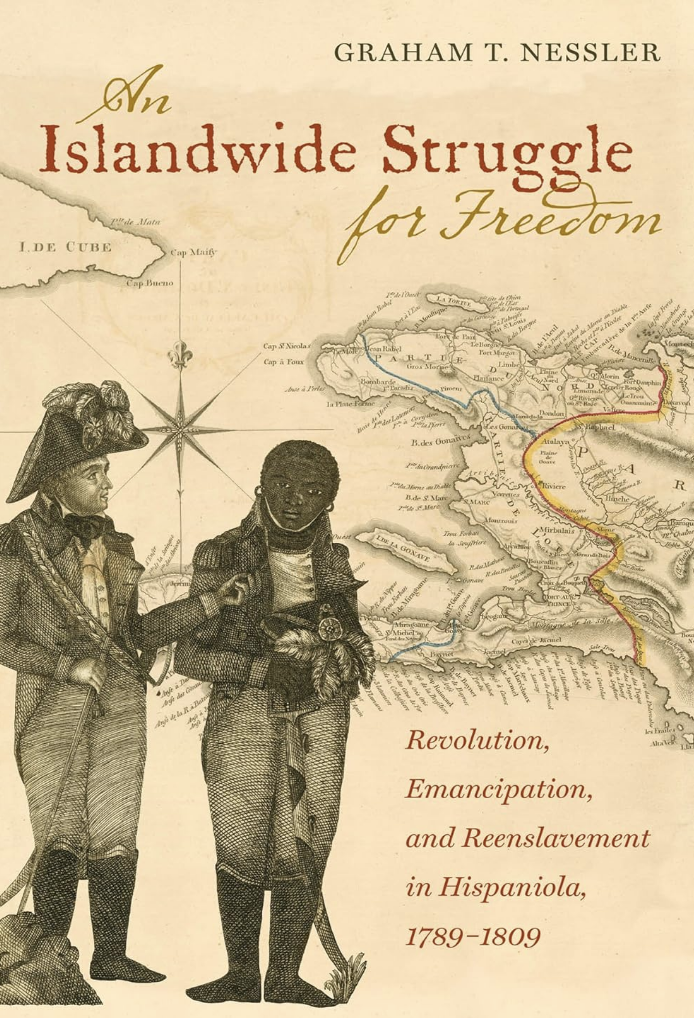
I'm a professionally trained historian specializing in Latin American and Caribbean history. My research focused on the Haitian Revolution, an 18th-century slave rebellion on the island of Hispaniola that fundamentally shaped the modern world. This work resulted in An Islandwide Struggle for Freedom: Revolution, Emancipation, and Reenslavement in Hispaniola, 1789-1809 (University of North Carolina Press, 2016).
Why study a single revolution for years? Because it reveals how our modern world was forged. The rise of Europe and the United States, patterns of global inequality, the structures of modern capitalism: none of these emerged naturally. They were built through specific historical processes, including racial ideologies, transatlantic slavery, violent resistance, and brutal counter-revolution.
The sugar in your coffee. Contemporary American politics. Global wealth disparities. All trace back, in significant ways, to centuries of enslavement, resistance, and the systems built to maintain or challenge those hierarchies. For several years, I taught students to see these connections, to understand the present through the lens of deeper history. I hope I helped them think more critically about the world they inherited.
This historical training shapes how I approach technology. Understanding systems, how they're built, who they serve, how they perpetuate or challenge power, matters just as much in cloud architecture as it does in studying revolutions. Both fields require seeing beyond surface-level narratives to understand underlying structures and long-term consequences.
My broader historical interests include Ancient Rome, U.S. Reconstruction and Civil Rights, and mainland Latin American history.